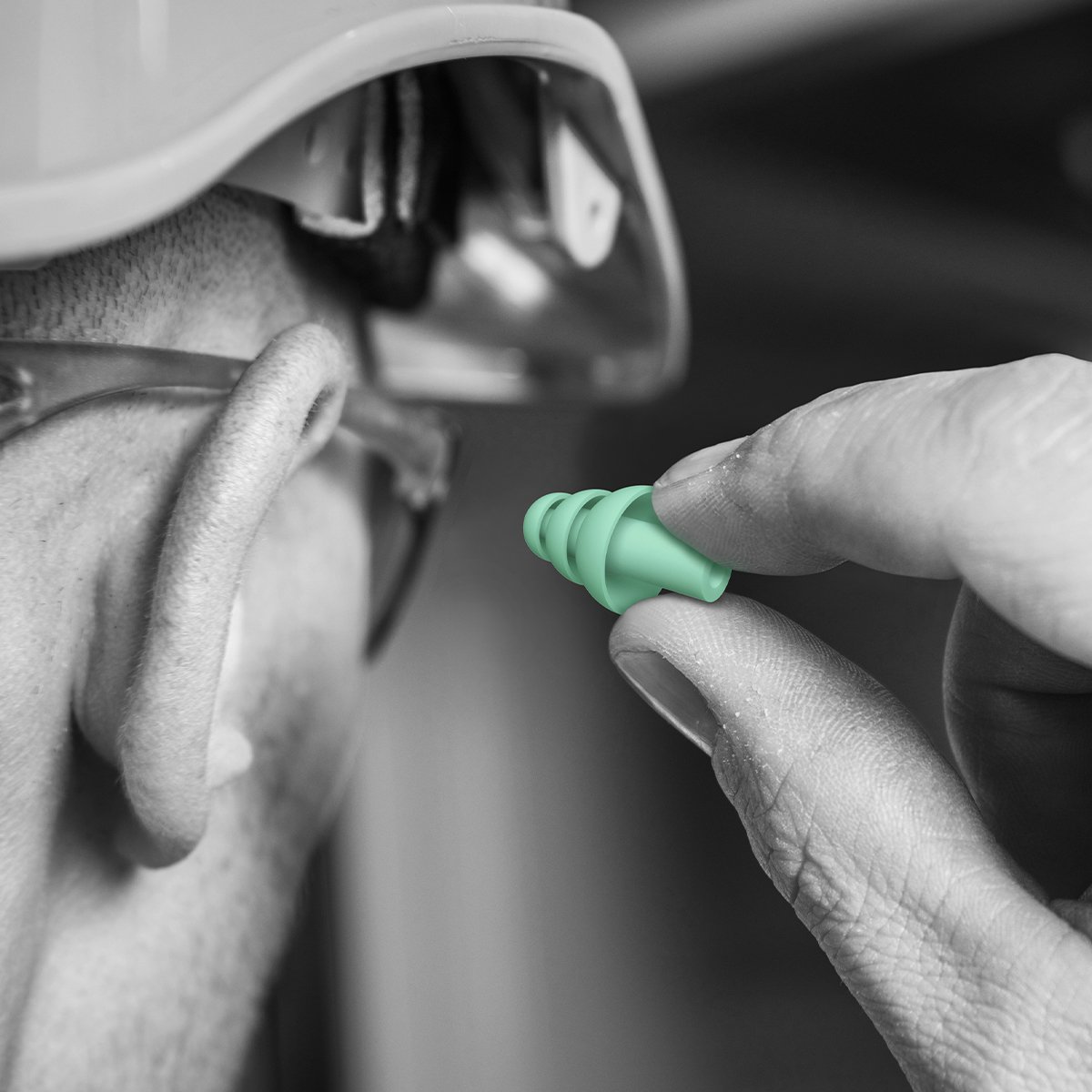
Yes, earplugs do come in different sizes. Most standard foam and silicone earplugs are sold as one-size-fits-all, but many brands now offer small, medium, and large options to better match different ear canal sizes. Getting the right fit makes a real difference in how well earplugs protect your hearing and how comfortable they feel during extended wear. Below, we answer the most common questions about earplug sizing so you can find what works best for your ears.
Why do some earplugs fit better than others?
Earplugs fit differently because ear canals vary significantly in size, shape, and depth from person to person. A plug designed for an average-sized ear canal may sit too loosely in a larger canal, reducing noise protection, or press too tightly in a smaller one, causing discomfort. The material, shape, and filter placement of the earplug all affect how well it seals and stays in place.
Foam earplugs expand to fill the ear canal, which works reasonably well for many people but can feel uncomfortable for those with narrower canals. Silicone and rubber earplugs tend to hold a fixed shape, so proper sizing matters more. Flanged designs with multiple ridges help create a better seal across a wider range of ear shapes, which is why they are often preferred for longer wear. The depth at which an earplug sits also affects both comfort and sound attenuation, so even small differences in canal anatomy can noticeably change the experience.
What sizes do earplugs typically come in?
Most earplugs that offer sizing come in small, medium, and large. Some brands add an extra-small option for very narrow canals, and a few offer extra-large for wider canals. Medium is the most common size and covers the broadest range of adult ear canals. Many everyday consumer earplugs skip sizing altogether and rely on flexible materials to accommodate variation.
The size usually refers to the diameter and depth of the earplug tip, not the overall length of the product. High-fidelity earplugs, which are designed for music events or professional environments, are more likely to come in multiple sizes because a precise fit is important for both comfort and consistent sound attenuation. Foam disposable earplugs rarely come in sizes because their expansion mechanism handles most of the fitting work, though this also means less control over the quality of the seal.
How do you know what earplug size you need?
The best way to find your earplug size is to try a medium first, then adjust based on how it feels and performs. A well-fitting earplug should sit comfortably in the canal without pressing painfully, stay in place without needing constant adjustment, and noticeably reduce surrounding noise. If it falls out easily or lets in too much sound, you likely need a larger size. If it causes pressure or soreness, try a smaller one.
Some practical indicators to guide your choice:
- If standard earbuds always fall out of your ears, you may have narrower canals and benefit from a small size
- If foam earplugs feel tight or cause a headache after short use, a smaller or softer option may suit you better
- If earplugs consistently feel loose or offer little noise reduction, a larger or more structured fit may work better
- Children and people with petite features generally need small or extra-small options
When in doubt, brands that offer multiple tip sizes in one package let you test different fits without buying separate products.
Do high-fidelity earplugs come in different sizes?
Yes, high-fidelity earplugs commonly come in multiple sizes, and getting the right size is especially important with this type of earplug. Unlike foam plugs that simply muffle sound, high-fidelity earplugs use a filter to reduce volume while preserving sound clarity. If the earplug does not fit properly, the filter cannot do its job correctly, and you lose both protection and sound quality.
A secure fit ensures that sound passes through the filter rather than leaking around the edges of the earplug. This is what allows high-fidelity earplugs to deliver balanced, natural sound rather than a muffled or distorted version of what you are hearing. For concert-goers, musicians, and workers in loud environments, this distinction matters a great deal. An earplug that fits well will protect your hearing consistently and feel comfortable enough to wear for hours.
Can earplugs be too small or too large for your ear?
Yes, earplugs can absolutely be too small or too large, and both create real problems. An earplug that is too small will not form a proper seal in the ear canal, which means sound leaks in around the edges and the level of noise reduction drops significantly. An earplug that is too large will press against the walls of the canal, causing discomfort, soreness, or even pain during extended wear.
Beyond comfort and protection, a poor fit can also affect how sound is perceived. An earplug sitting at the wrong depth or angle may make sounds seem unbalanced or distorted, even if the earplug itself is designed for high-fidelity performance. Over time, wearing earplugs that do not fit correctly makes people less likely to use them consistently, which defeats the purpose of having hearing protection at all. Finding the right size is not just about comfort; it directly affects whether the product actually protects you.
What’s the difference between universal-fit and sized earplugs?
Universal-fit earplugs are designed to accommodate a wide range of ear canal sizes without requiring the user to select a specific size. They typically achieve this through flexible flanged shapes, soft expandable materials, or layered tip designs that compress or conform to different canal widths. Sized earplugs, by contrast, come in distinct small, medium, and large variants, giving users a more precise and consistent fit based on their actual anatomy.
Universal-fit earplugs are convenient and work well for many people, but the trade-off is that they may not perform optimally at either end of the size spectrum. Someone with a very narrow or very wide canal may find that a truly sized earplug offers noticeably better attenuation and comfort. That said, a well-engineered universal earplug with a thoughtful tip design can close much of this gap.
We designed our Shush Worker earplugs to deliver a secure, comfortable fit across a wide range of ear sizes without sacrificing protection. The soft synthetic rubber construction adapts to the ear canal while maintaining a firm enough seal for consistent SNR 23 dB attenuation, and the internal ceramic filter ensures sound stays clear and natural even in the loudest industrial environments. For workers who need reliable protection throughout a full shift, the difference between a properly fitting earplug and a generic one is genuinely noticeable.
Foire aux questions
How do I insert earplugs correctly to get the best fit and noise reduction?
For foam earplugs, roll the plug into a thin cylinder, reach over your head with your opposite hand to gently pull your ear upward and outward, then insert the compressed plug and hold it in place for 20–30 seconds while it expands. For silicone or flanged earplugs, use the same ear-pull technique and push the plug in with a gentle twisting motion until it seats snugly. Proper insertion technique can make just as big a difference as choosing the right size, so even a correctly sized earplug will underperform if it isn't inserted all the way.
Can I wear the wrong size earplugs just once without it being a big deal?
Occasional short-term use of an ill-fitting earplug is unlikely to cause lasting harm, but it does mean you may not be adequately protected during that exposure. In loud environments like concerts, construction sites, or industrial facilities, even a single session with insufficient noise reduction can contribute to cumulative hearing damage. If you're in a pinch, a poorly fitting earplug is still better than none at all, but finding the right size should be a priority before your next exposure.
Are there earplugs specifically designed for people with small or narrow ear canals?
Yes, several brands offer small and extra-small earplug sizes specifically designed for narrower ear canals, and these are worth seeking out if standard sizes consistently cause discomfort or fall out. Look for high-fidelity earplug brands that include multiple tip sizes in the box, or search specifically for earplugs marketed toward women or younger adults, as these often come in smaller dimensions. Foam earplugs are also available in slim or petite versions that are noticeably narrower than the standard cylindrical design.
How do I know if my earplugs are actually blocking enough noise, regardless of size?
A simple at-home check is to cup your hands firmly over both ears while wearing the earplugs — if the sound level drops noticeably, the earplugs are not sealing well and are letting sound leak around the edges. You can also hum softly while wearing them; a well-sealed earplug will make your own voice sound noticeably louder and more resonant inside your head, which is a sign of a good acoustic seal. For workplace use, check that your earplugs carry a published Noise Reduction Rating (NRR) or SNR value, and ensure the rating is sufficient for your specific noise environment.
What's the most common mistake people make when buying earplugs for the first time?
The most common mistake is defaulting to cheap disposable foam earplugs without considering whether they actually fit or suit the intended use. Foam plugs work fine for occasional, short-term use, but they offer little control over fit quality and can degrade quickly with repeated use. First-time buyers often overlook the importance of matching the earplug type — foam, flanged, or high-fidelity — to the specific environment they need protection in, whether that's sleeping, concerts, or work, since each use case benefits from a different design.
How do I care for and clean reusable earplugs to keep them fitting properly over time?
Wash reusable silicone or flanged earplugs regularly with mild soap and warm water, then rinse thoroughly and allow them to air dry completely before storing them. Avoid using alcohol-based cleaners, which can degrade the material and cause the tips to stiffen or crack over time, changing how they fit. Inspect your earplugs periodically for any tears, hardening, or deformation — once the material loses its flexibility, the fit and seal quality will suffer, and it's time to replace them.
Is it worth getting custom-molded earplugs instead of sized off-the-shelf options?
Custom-molded earplugs, made from an impression of your specific ear canal, offer the most precise fit possible and are worth the investment if you use hearing protection daily, such as musicians, industrial workers, or frequent concert-goers. They typically cost between $100 and $300 through an audiologist and can last several years with proper care. That said, well-sized off-the-shelf earplugs from reputable brands close much of the performance gap at a fraction of the cost, making them the practical choice for most people before committing to a custom option.